ACL Reconstruction Surgery in Gachibowli: Recovery Timeline and What to Expect
Recovery after ACL reconstruction usually takes six months to a year. Most people walk with crutches at first, go back to desk-type work after a few weeks, and rebuild normal daily activity over the first six months. Return to sport usually comes between six and twelve months, once strength, movement and control tests are met, not on a fixed date.
Recovery after ACL reconstruction usually takes six months to a year. Most people walk with crutches for the first couple of weeks, return to desk-type work after a few weeks, and rebuild normal daily activity over the first six months. Return to sport usually comes between six and twelve months, once strength, movement and control tests are met. The exact timeline depends on your knee, any other injuries treated at the same time, and how consistently you do your physiotherapy.
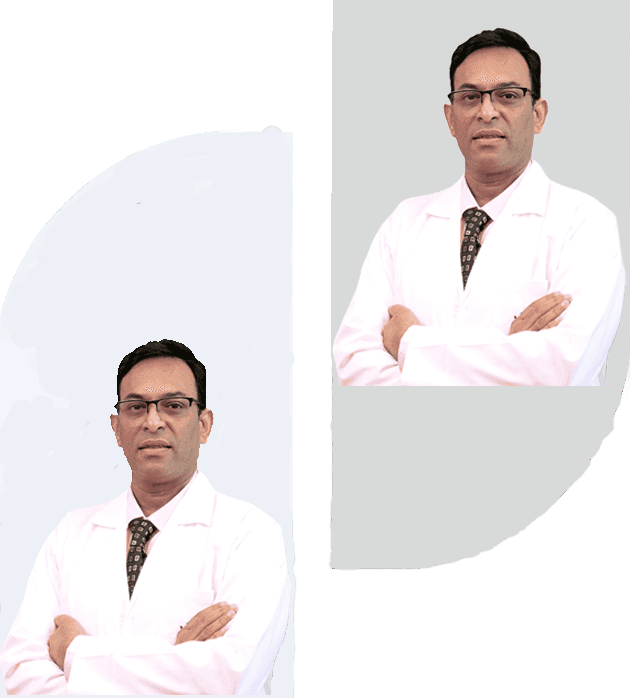
Dr Uday Prakash Reddy (MBBS, MS Orthopedics) is a Senior Consultant Orthopedic Surgeon practising at Continental Hospitals, Financial District, Hyderabad.
Key points
- Full recovery after ACL reconstruction typically takes 6 to 12 months.
- Crutches are usually needed for about the first 2 weeks, and many people walk without them by 2 to 3 weeks.
- Return to work depends on the job; physically demanding work takes longer than desk work.
- Return to sport is based on passing strength, movement and balance criteria, not on the calendar.
- A meniscus repair or other injury treated at the same time can change the plan.
What is ACL reconstruction?
The anterior cruciate ligament (ACL) is a strong band inside the knee that stops the shin bone sliding forward and keeps the knee stable during twisting and turning. ACL reconstruction replaces a torn ACL with a graft, usually a piece of tendon from your own knee or thigh, fixed into small tunnels in the bone. It is usually done by keyhole (arthroscopic) surgery.
The ligament is reconstructed rather than stitched back together because a torn ACL heals poorly inside the joint. AAOS explains that grafts can come from your own body (patellar, hamstring or quadriceps tendon) or from a donor, and your surgeon will discuss which suits you. You can read more about knee procedures on the knee arthroscopy and sports injury page.
Does every ACL tear need surgery?
No. The decision depends on how active you are, whether the knee feels unstable, and whether other parts of the knee are injured. People with partial tears and no instability, or lower-demand lifestyles, may do well with physiotherapy alone. People who play pivoting sports, do heavy manual work, or have a knee that keeps giving way are usually advised to consider reconstruction.
A UK trial published in The Lancet in 2022 compared surgery with rehabilitation first for people whose ACL injury was more than four months old and still unstable. Both groups improved, but the surgical group reported better knee function at 18 months, and many people in the rehabilitation group went on to have surgery anyway. For a recent injury, AAOS suggests a period of structured rehabilitation can be reasonable before deciding.
What does the ACL recovery timeline look like?
Recovery moves through stages, from controlling swelling and getting the knee straight, to rebuilding strength and balance, and finally to sport-specific training. The table below shows typical ranges taken from NHS knee ligament surgery guidance and AAOS patient information. Your own plan may be quicker or slower, and your surgeon and physiotherapist will adjust it.
| Stage | Typical time after surgery | Main focus |
|---|---|---|
| Early recovery | Weeks 0 to 2 | Controlling pain and swelling, getting the knee fully straight, activating the thigh muscle, walking with crutches. |
| Getting moving | Weeks 2 to 6 | Walking without crutches (often by 2 to 3 weeks), bending the knee further, early strengthening and balance work. |
| Building strength | Weeks 6 to 24 | Gradual return to normal daily activity; cycling and swimming encouraged; avoid twisting, jumping and turning sports. |
| Return to sport | Months 6 to 12 | Running, agility and sport-specific drills, then a return to sport once strength, movement and control criteria are met. |
The NHS notes that most people can do most activities again within a few months, but it can take up to a year to play sport again. AAOS gives a similar range of 6 to 12 months for full sports participation.
When can you go back to work and drive?
Return to work depends on your job. The NHS says many people go back after about four to six weeks, with physically demanding jobs taking longer. Driving should wait until your medical team says you are fit to drive and you can control the car safely; check with your insurer too.
What decides when you can return to sport?
Return to sport is decided by how your knee performs, not by the number of weeks since surgery. Your surgeon and physiotherapist check that pain and swelling have settled, the knee moves fully, the leg is strong enough, and your balance and control are back. Going back too early raises the risk of injuring the knee again.
AAOS lists these as the usual conditions for returning to sport:
- No pain or swelling during or after activity
- Full range of movement in the knee
- Muscle strength, endurance and use of the leg fully restored
- Balance and control of the leg fully restored through neuromuscular training
What can change your recovery timeline?
The biggest factors are other injuries treated at the same time, how well swelling is controlled early on, and how regularly you do your physiotherapy. A meniscus repair done alongside the ACL often means more cautious weight-bearing and bending at first. Stiffness and ongoing swelling can also slow things down.
- Other injuries repaired at the same time, such as the meniscus or another ligament
- The type of graft used
- How consistently you follow the exercise programme, at home and with your physiotherapist
- Your fitness and strength before surgery
- The demands of your sport or job
How should you look after your knee at home?
In the first weeks, the aim is to keep swelling down and the knee straight. The NHS suggests icing for 15 to 20 minutes every 2 to 3 hours, keeping the leg raised when resting, using crutches and any brace as advised, and avoiding twisting, bending down and reaching up. Do not put a pillow under the knee, as this can make it harder to straighten.
- Use crutches and any brace exactly as advised, and stop only when your physiotherapist says so.
- Ice the knee wrapped in a cloth for 15 to 20 minutes every 2 to 3 hours; stop if the skin goes numb.
- Keep the leg raised when resting, but do not place a pillow under the knee.
- Get up and walk around as advised to lower the risk of blood clots.
- Do your home exercises every day, even when the knee feels fine.
Contact your surgeon promptly if you notice increasing redness or discharge from the wound, fever, or new pain and swelling in the calf.
practice observation: "Many of the people I see for ACL reconstruction from Gachibowli and the IT corridor feel almost normal by three or four months and want to go back to football or badminton straight away. That is exactly the stage when the knee is still regaining strength and control, so the later months of rehabilitation matter as much as the early ones."
Sources
- NHS – Recovering from ACL (anterior cruciate ligament) surgery
- OrthoInfo (AAOS) – ACL Injury: Does It Require Surgery?
- Beard DJ et al. Rehabilitation versus surgical reconstruction for non-acute ACL injury (ACL SNNAP). The Lancet, 2022
- NHS – Knee ligament surgery: recovery
This article is for general health information only and is not a diagnosis or a substitute for a consultation. Consult a qualified doctor if symptoms persist or get worse.
About the Author
Dr. Uday Prakash Reddy
Senior Consultant Orthopedic Surgeon at Continental Hospitals, Hyderabad, with over 24 years of experience in orthopedics, arthroscopy and joint replacement.