
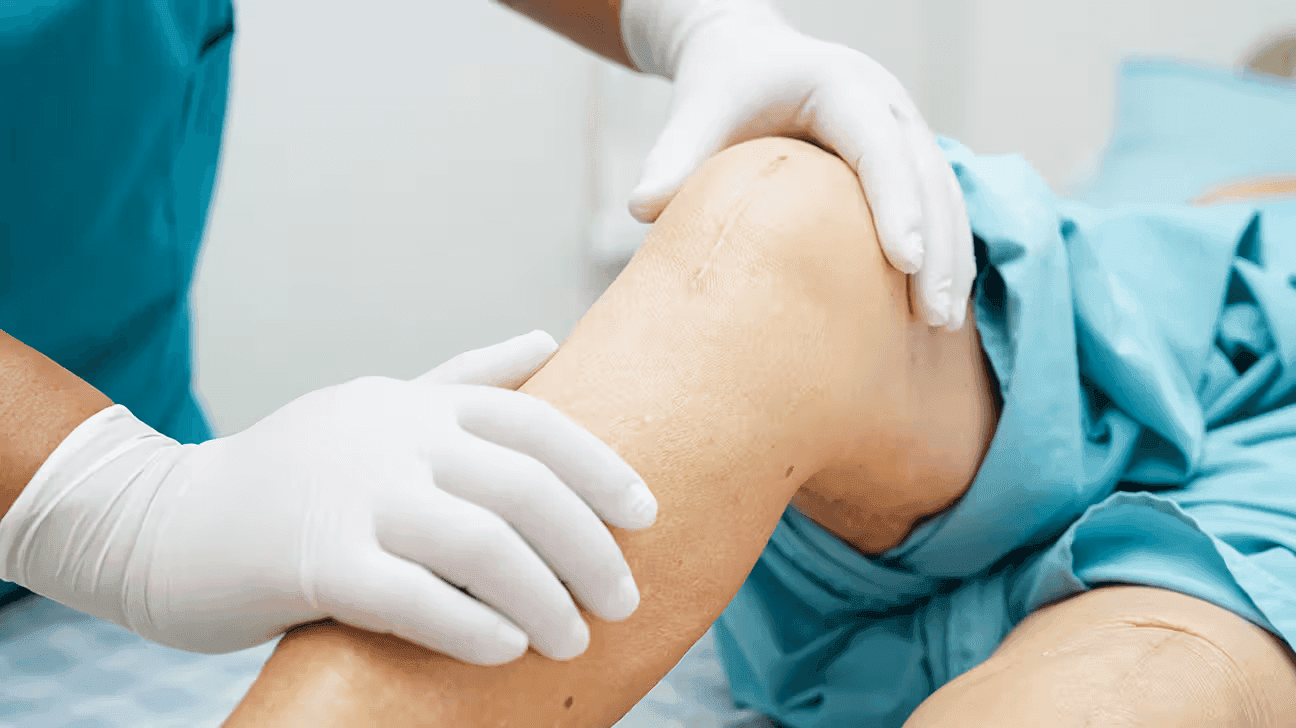
Knee replacement surgery replaces the worn or damaged surfaces of the knee joint with a durable artificial implant to relieve pain and restore movement. Total knee replacement resurfaces the whole joint, while partial (unicompartmental) knee replacement treats only the damaged compartment. Modern implants commonly last 15–20 years.
Is knee pain making it hard to walk, climb stairs or sleep at night? When arthritis or injury wears down the knee joint and non-surgical treatments no longer help, knee replacement surgery can restore comfortable, confident movement and dramatically improve your quality of life.
At Dr Uday Ortho Care, you receive expert knee replacement surgery in Hyderabad using modern implants and minimally invasive techniques — with a personalised plan focused on faster recovery and long-lasting results.
What is Knee Replacement Surgery?
Knee replacement (knee arthroplasty) removes the damaged cartilage and bone from the knee joint and replaces them with a precisely fitted artificial implant made of metal and medical-grade polyethylene. The implant recreates the smooth, gliding surfaces of a healthy knee, relieving pain and restoring movement. There are two main approaches:
- Total Knee Replacement (TKR): the entire knee joint surface is resurfaced — usually for widespread arthritis or significant joint damage.
- Partial Knee Replacement (PKR): also called unicompartmental replacement, only the damaged compartment is replaced, preserving healthy bone and ligaments. It suits patients with damage limited to one part of the knee.
When is Knee Replacement Recommended?
Knee replacement is usually considered when you have severe, persistent knee pain and stiffness that limits daily activities and no longer responds to medication, physiotherapy, injections or lifestyle changes. Common reasons include:
- Advanced osteoarthritis or rheumatoid arthritis
- Post-traumatic arthritis after a knee injury or fracture
- Progressive knee deformity (bow legs or knock knees)
- Pain that disturbs sleep or continues at rest
- Difficulty walking, climbing stairs or getting up from a chair
Benefits of Knee Replacement
- Lasting pain relief — relief from chronic pain that other treatments could not control.
- Restored mobility — walk, climb stairs and resume daily activities with confidence.
- Corrected alignment — deformities such as bow legs are straightened.
- Durable results — with modern implants and proper care, results commonly last 15–20 years.
- Better quality of life — improved sleep, independence and overall well-being.
What to Expect — Surgery & Recovery
- The procedure — performed under spinal or general anaesthesia, most knee replacements take 1–2 hours.
- Hospital stay — typically a few days, depending on your health and progress.
- Early recovery — guided walking and physiotherapy usually begin within a day of surgery.
- Rehabilitation — most patients resume light daily activities within 4–6 weeks, with continued strengthening over a few months.
Physiotherapy is essential to regain strength, movement and stability, and to protect your new joint for the long term.
Cost of Knee Replacement in Hyderabad
Knee replacement cost is not fixed — it varies with the type of surgery (total or partial), the implant chosen and the hospital. Dr. Uday ensures every patient receives a clear, itemised estimate before treatment, and many health insurance plans cover the procedure.
Why Choose Dr. Uday Prakash Reddy?
- Experience — over 24 years in orthopedics, with knee replacements performed using modern, precise techniques.
- Patient-first approach — a treatment plan tailored to your knee, your lifestyle and your goals.
- Complete care — from evaluation and surgery to structured rehabilitation and long-term follow-up.
Take the First Step Toward Pain-Free Knees
Don't let knee pain limit your life. Consult Dr. Uday Prakash Reddy for expert knee replacement surgery in Hyderabad and get back to the activities you love.
Medically reviewed by Dr. Uday Prakash Reddy, MBBS, MS (Orthopedics), Senior Consultant Orthopedic Surgeon, Continental Hospitals. This information is educational and not a substitute for a consultation.